01 · Image and Video
Crew 404
Premise
A speculative movie trailer built around one question: what happens when humanity perfects non-damaging genetic modification?
Made with generative video tools guided by custom prompting and featuring original characters, it follows a society that, upon attaining this absolute biological power, descends into catastrophic war.

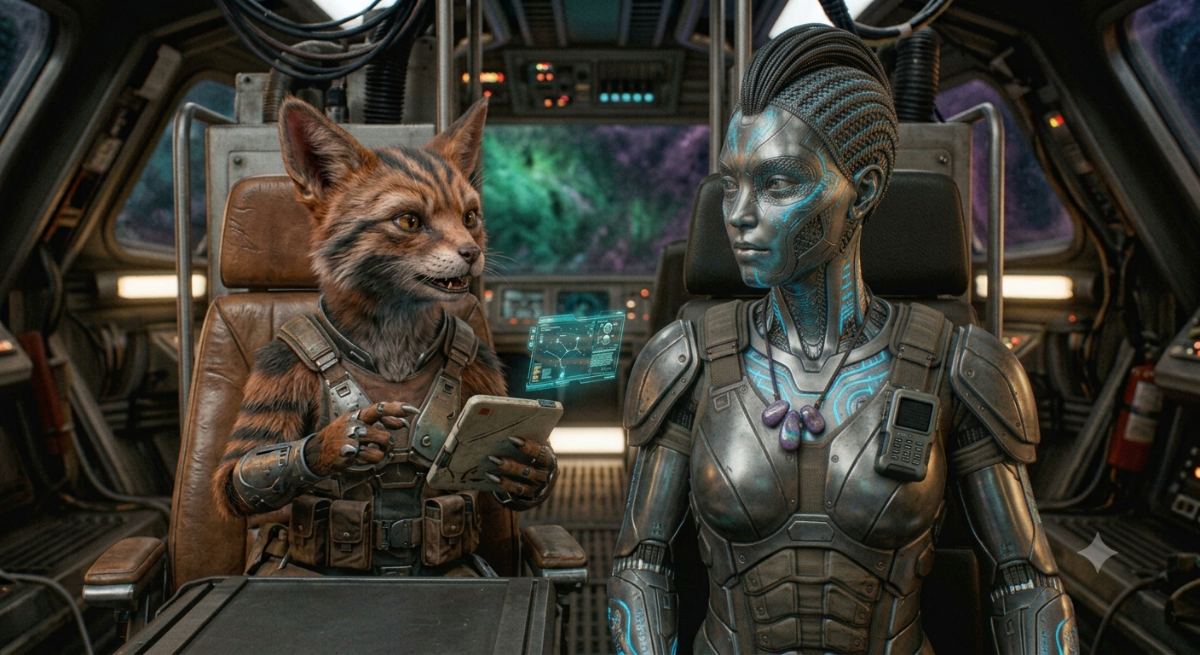
The characters
The crew came first. Each figure was designed through iterative prompting before any sequence existed, so the world had inhabitants before it had a plot.
01 · Problem
The problem
I wanted an abstract ethical question to feel visceral in a few minutes of trailer, using original characters the audience has zero context for.
There wasn't time to explain the world. The trailer itself had to do all the world-building and still land an argument about the cost of "perfection."
02 · Process
What I tried
I built the sequences in passes: an early scene sequence, a SOMA-based pass, a final-scene pass. Each one was prompted and re-prompted until it cut together.
To push past what generative tools alone could convincingly produce, I mixed in free stock footage for scale, and used Eleven Labs for voice-over and sound effects.
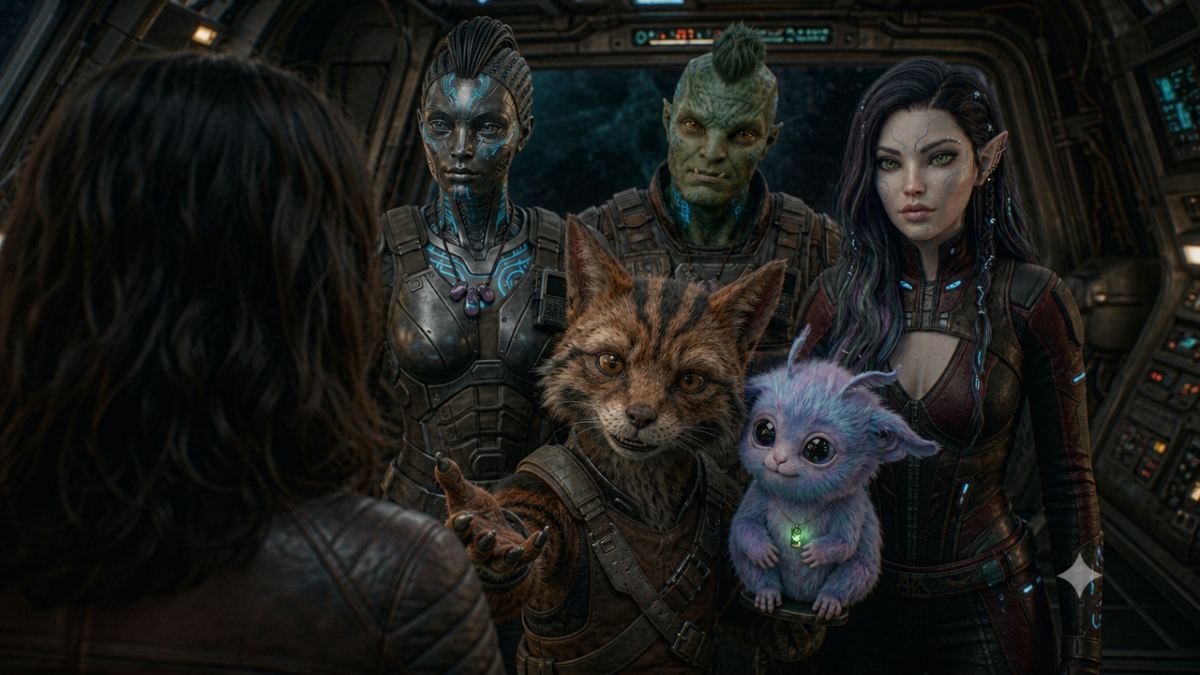
Assembling the crew
Getting the group to read as a single unit, rather than a set of separate designs, was what made the final walk-away shot land.
03 · Revision
What I changed
The first cuts read as either "cool sci-fi trailer" or "grim war footage," but never both at once.
I reworked the pacing so the calm hubris of the early scenes collides directly with the chaos of the war footage, retimed the final dancing sequence so it lands as dark irony instead of celebration, and pulled back on which shots carried literal dialogue.
04 · Intent
Why
The point was to make editing rhythm itself the argument: the excitement of "solving" biology and the cost of that power are inseparable. Without narration, the only way to say it was through the collision of tone between shots.
Beyond that, it's meant as a quiet awareness piece. I'm not taking any political side, just asking how not-so-crazy a future like this really is if the world keeps heading the way it currently is.
It's also where my two fields meet: Global Studies gave me the framework to think about power and consequence at a societal scale, and Media Arts gave me the tools to make that scale feel personal and immediate.
The complete archive, 24 items
- Medium
- Image and Video
- Year
- 2026
- Course
- MAT 110 CF
- By
- Claudia Silva
- Documentation
- AI prompting document (PDF)